Innovation Playground
A summer school program designed for Habib University in Karachi
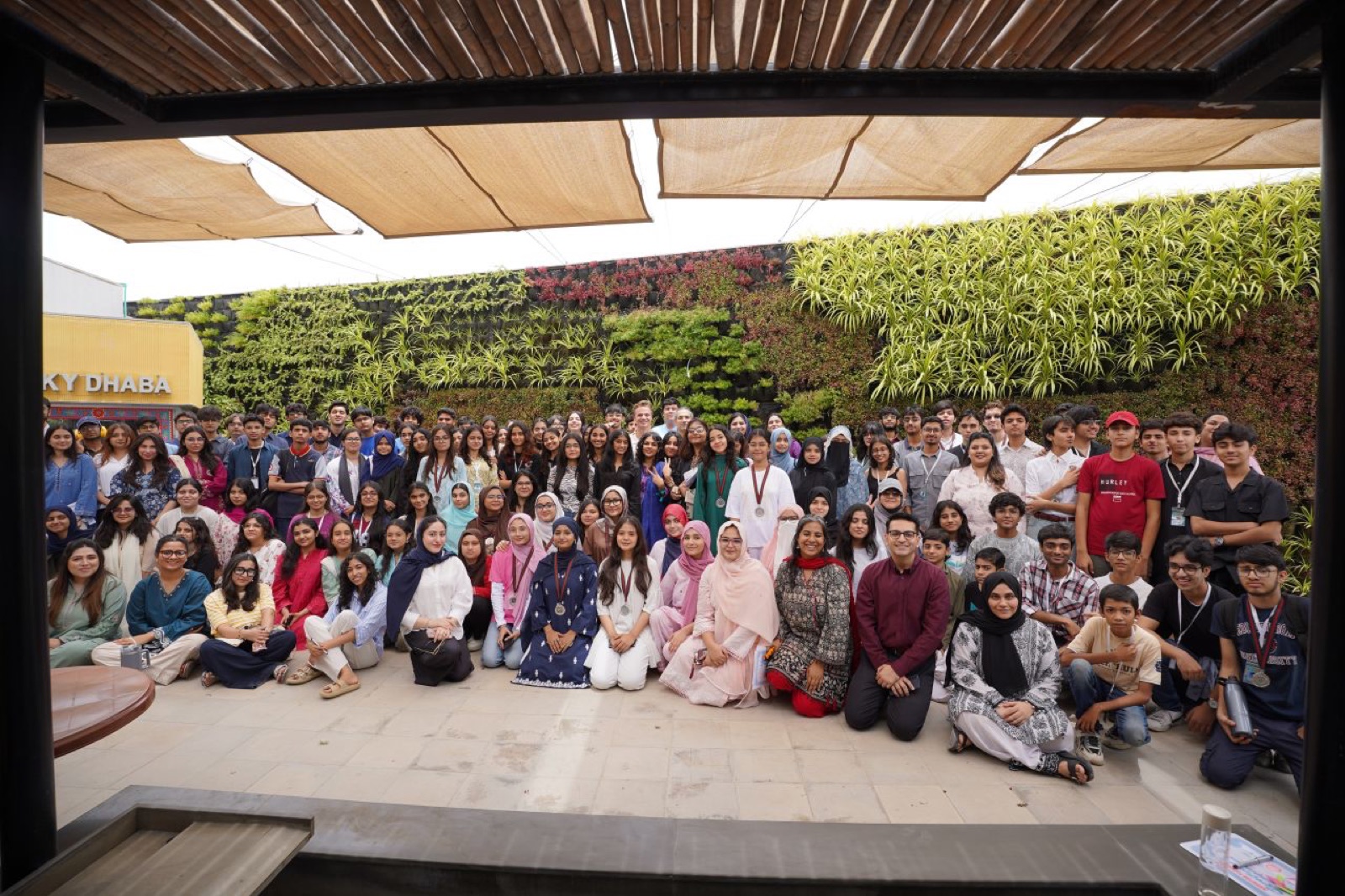
Created and directed the first edition of an eight-session design studio for 150 students at Habib University in Karachi, building the curriculum, 24-team operating model, and 12-coach facilitation system. Invited back for 2027.
At a glance
- Scale
- 150 students, 24 teams, 12 coaches, 8 sessions
- Role
- Founding Director
- Methods
- Curriculum design · facilitation · design research · prototyping
- Outcome
- 24 physical prototypes; curriculum retained by Habib; invited back for 2027
Karachi as the classroom
Karachi is a vibrant, fascinating metropolis, and I wanted this inaugural design studio to feel built for the city. Together with Habib’s Admissions team and the Institute of Design Thinking, Entrepreneurship, and Leadership (IDEAL), I developed six challenge areas rooted in the city and named in Urdu: Baithak (spaces of belonging), Barsaat (water and resilience), Roz ka Safar (the daily commute), Ankahi (invisible conversations), Hisaab Kitab (financial futures), and Screen ke Paar (social media and digital dignity). Students used the same core design methods across these challenge areas.
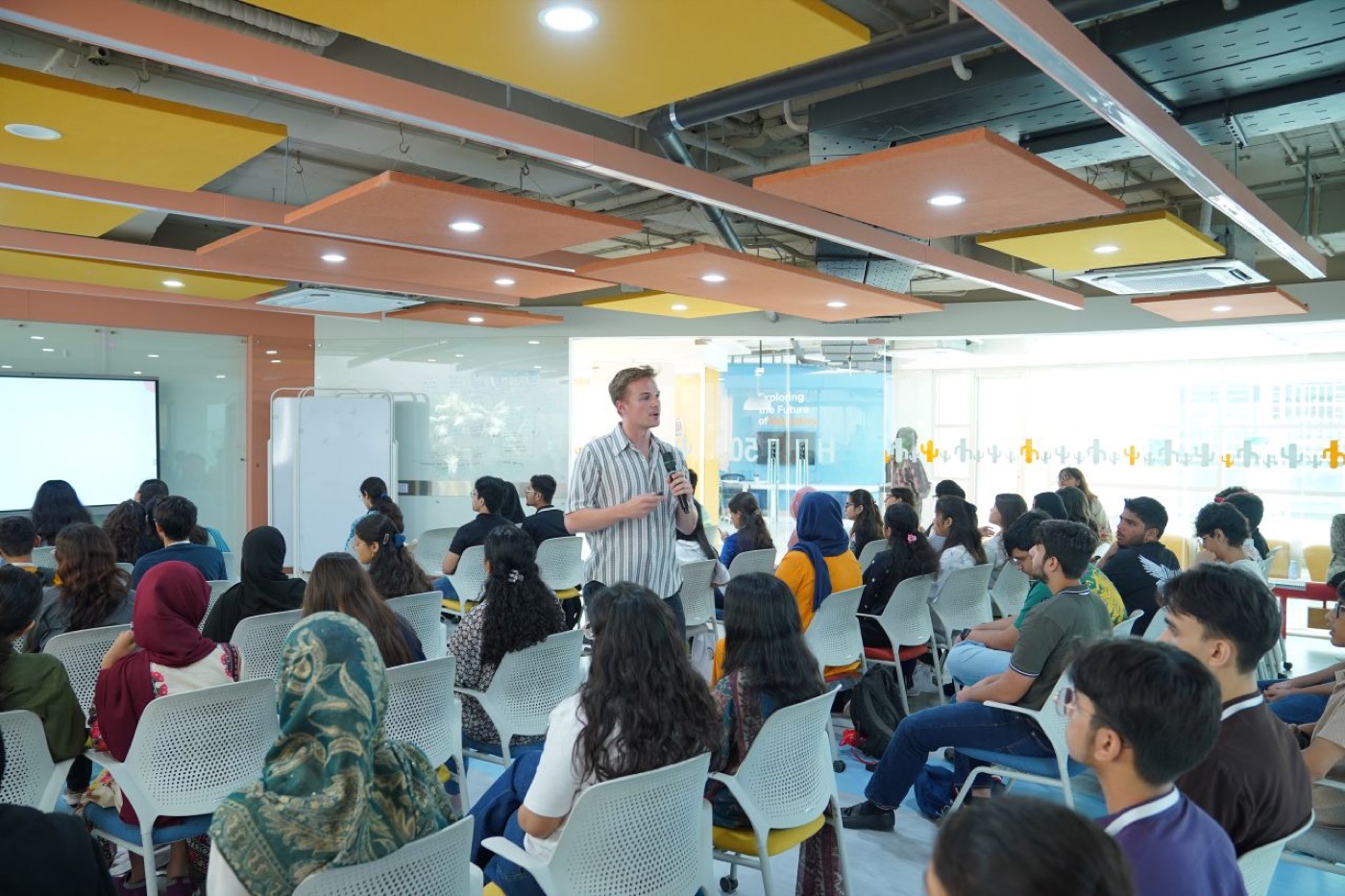
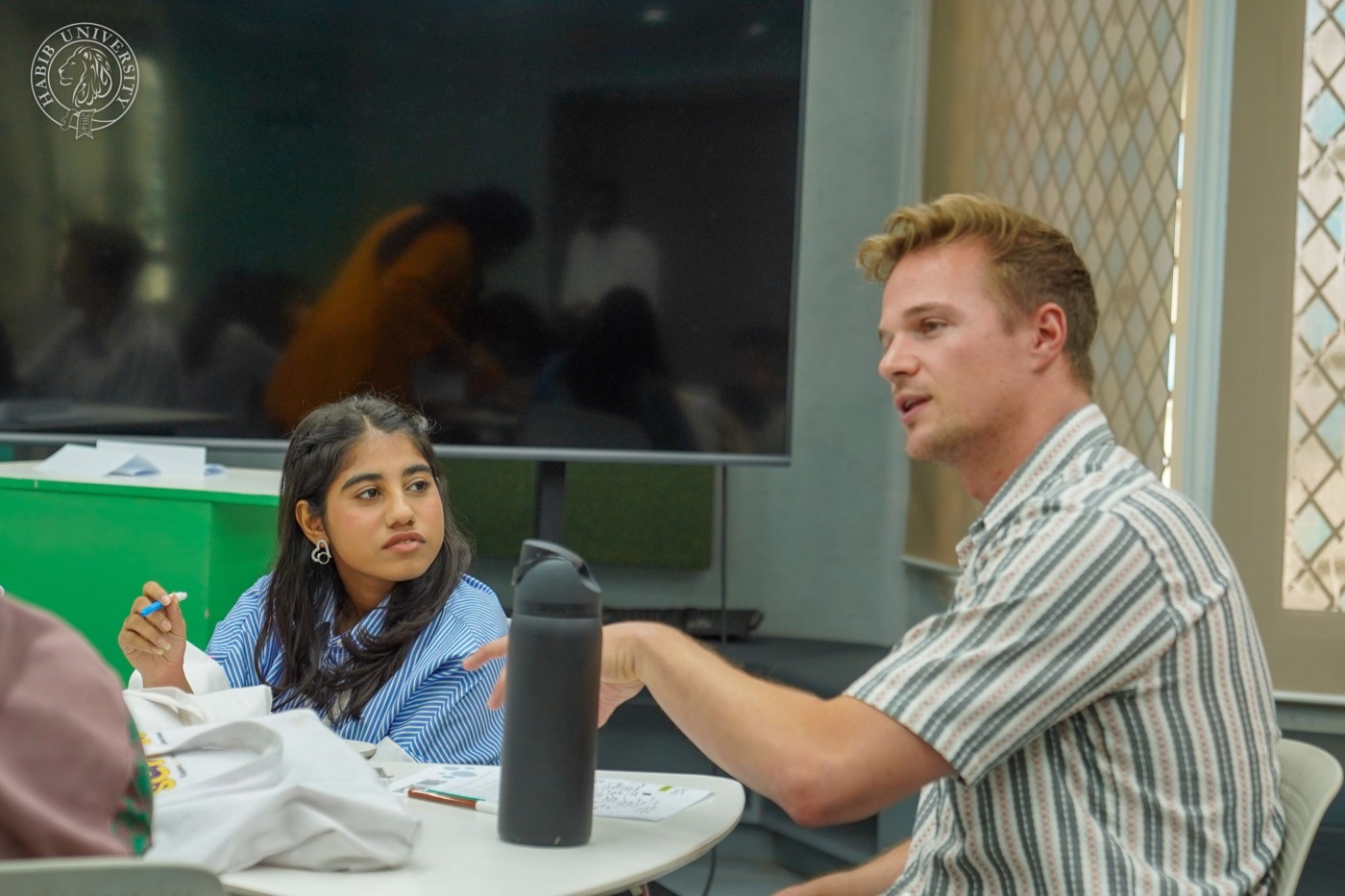
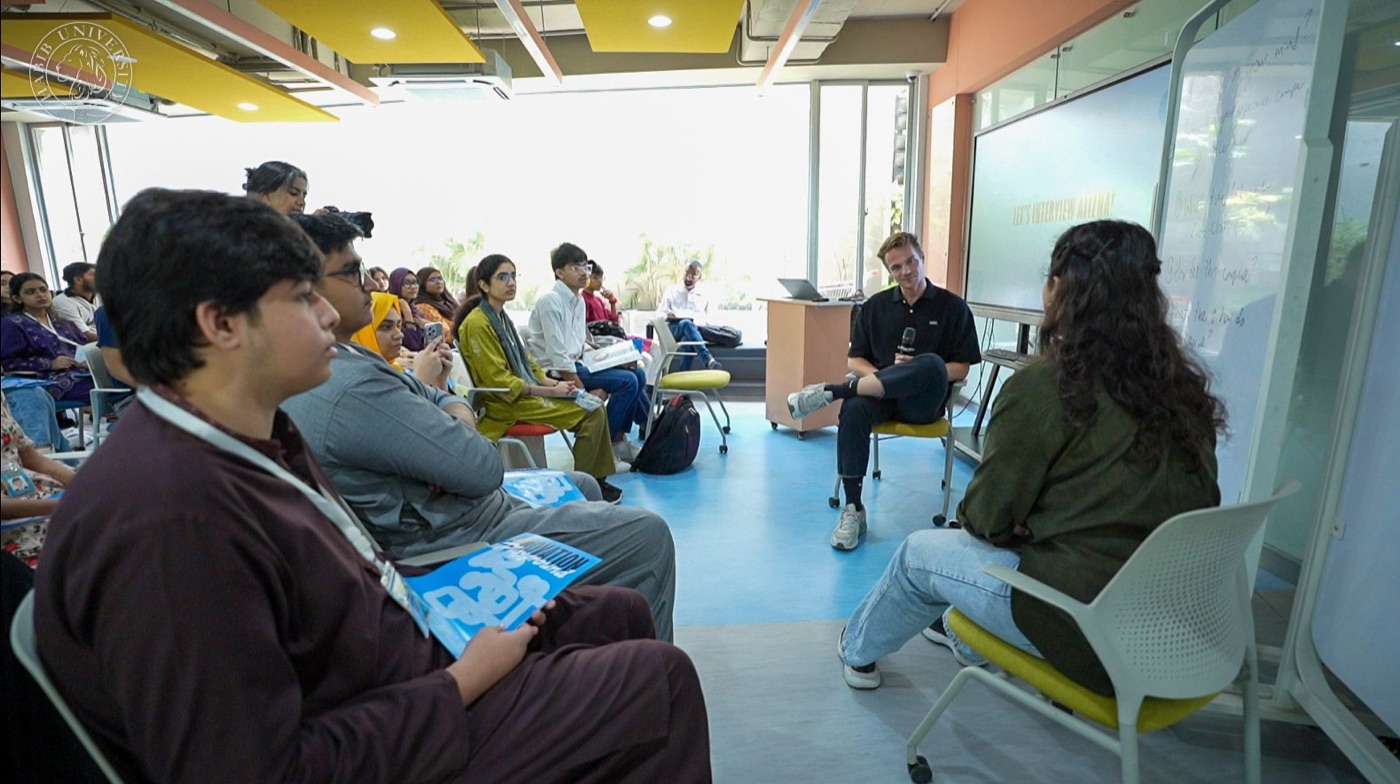
Teaching 150 students design methods was also an operating-design challenge. I built the eight-session curriculum, course syllabus, performance rubrics, session-by-session run-of-shows, materials system, and a 60-page facilitation guide for twelve coaches drawn from across the university. The goal was to give every team room to explore while keeping a program of this size coherent enough to move together.
Un/learning, then building
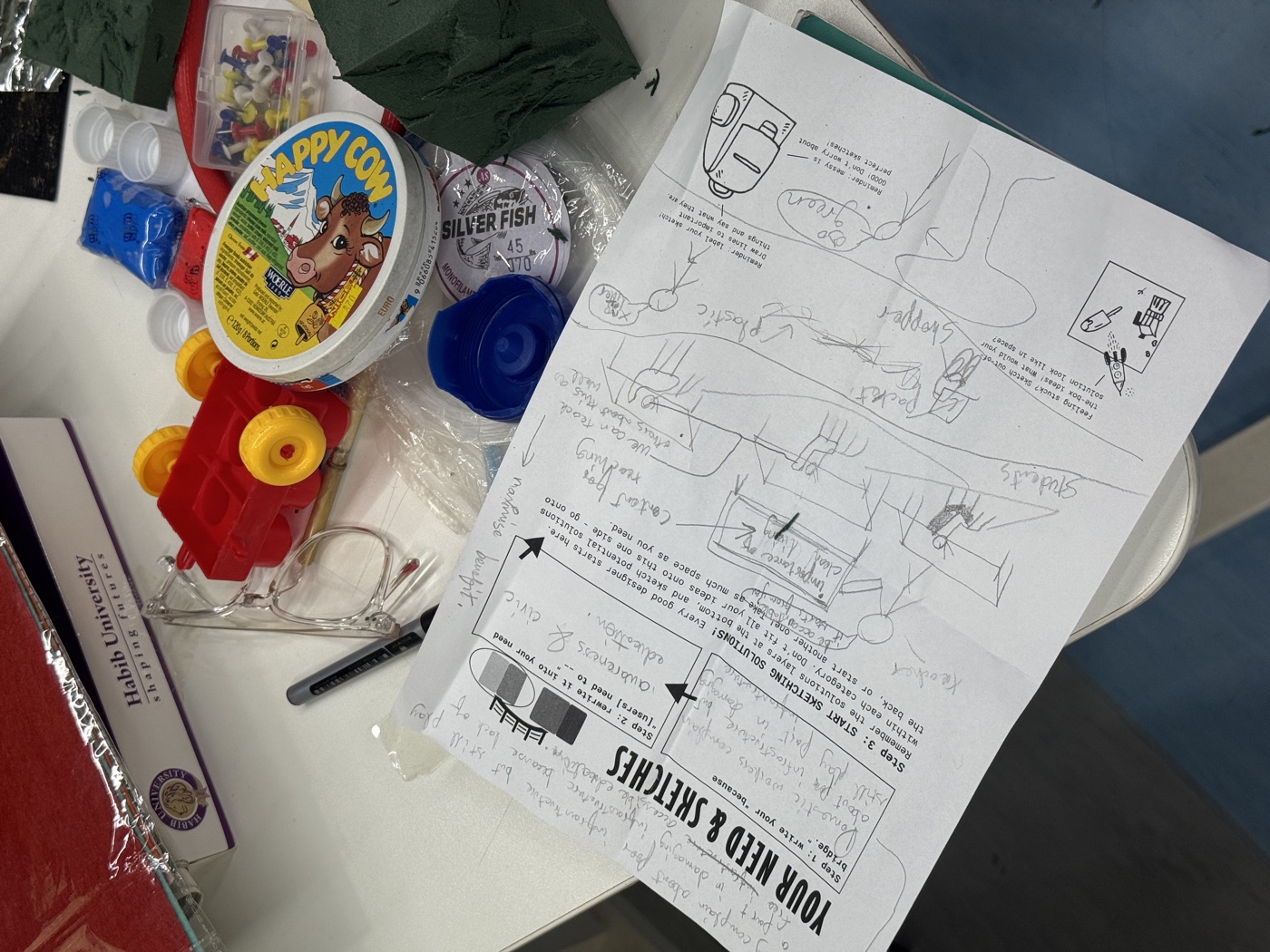
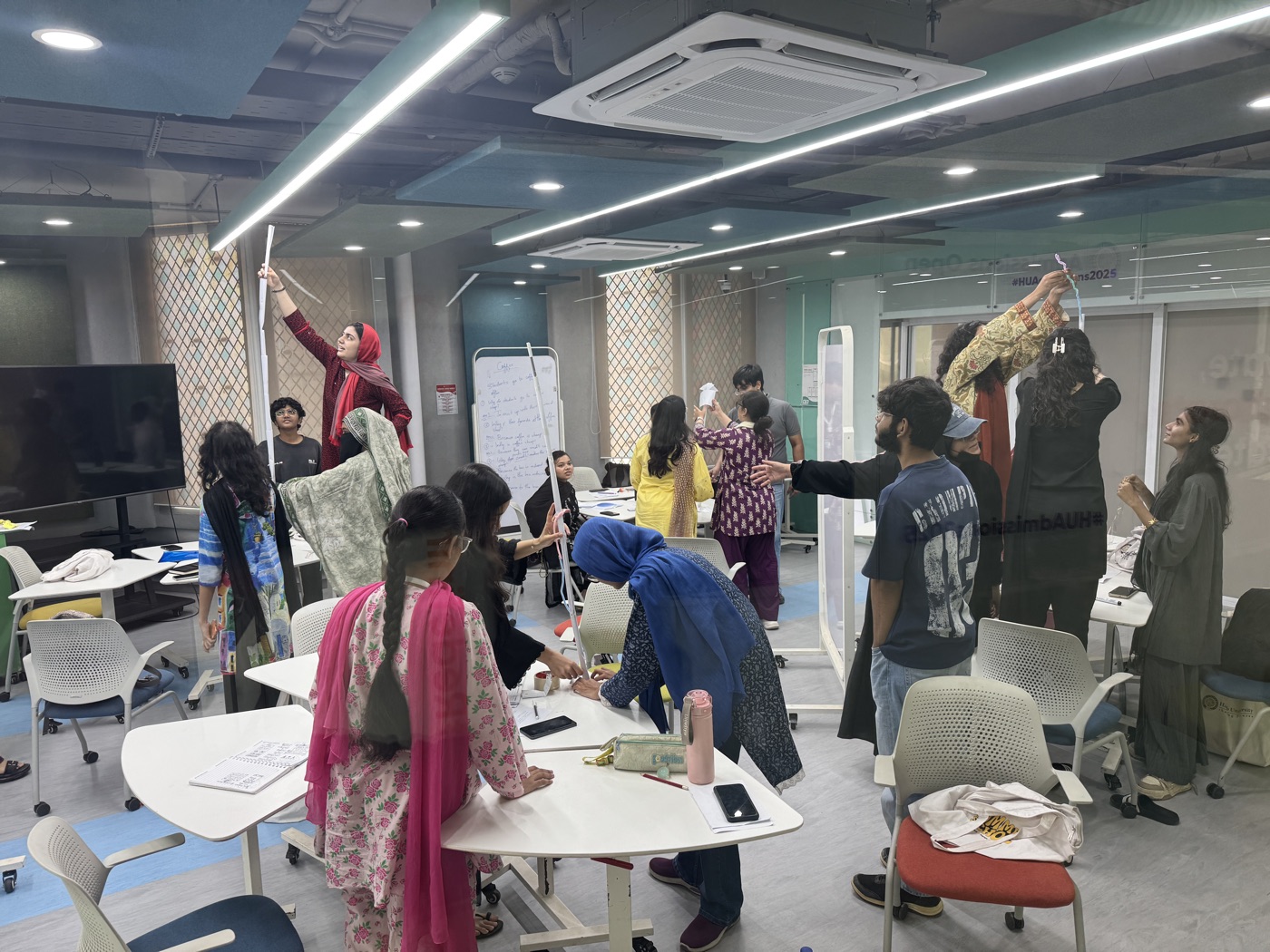
Students moved from field research and user interviews through synthesis, needs, ideation, and physical prototyping. Many came from rigorous academic environments oriented around finding the correct answer. One of my favorite shifts was hearing the question change from “Is this right?” to “How could we test this?”
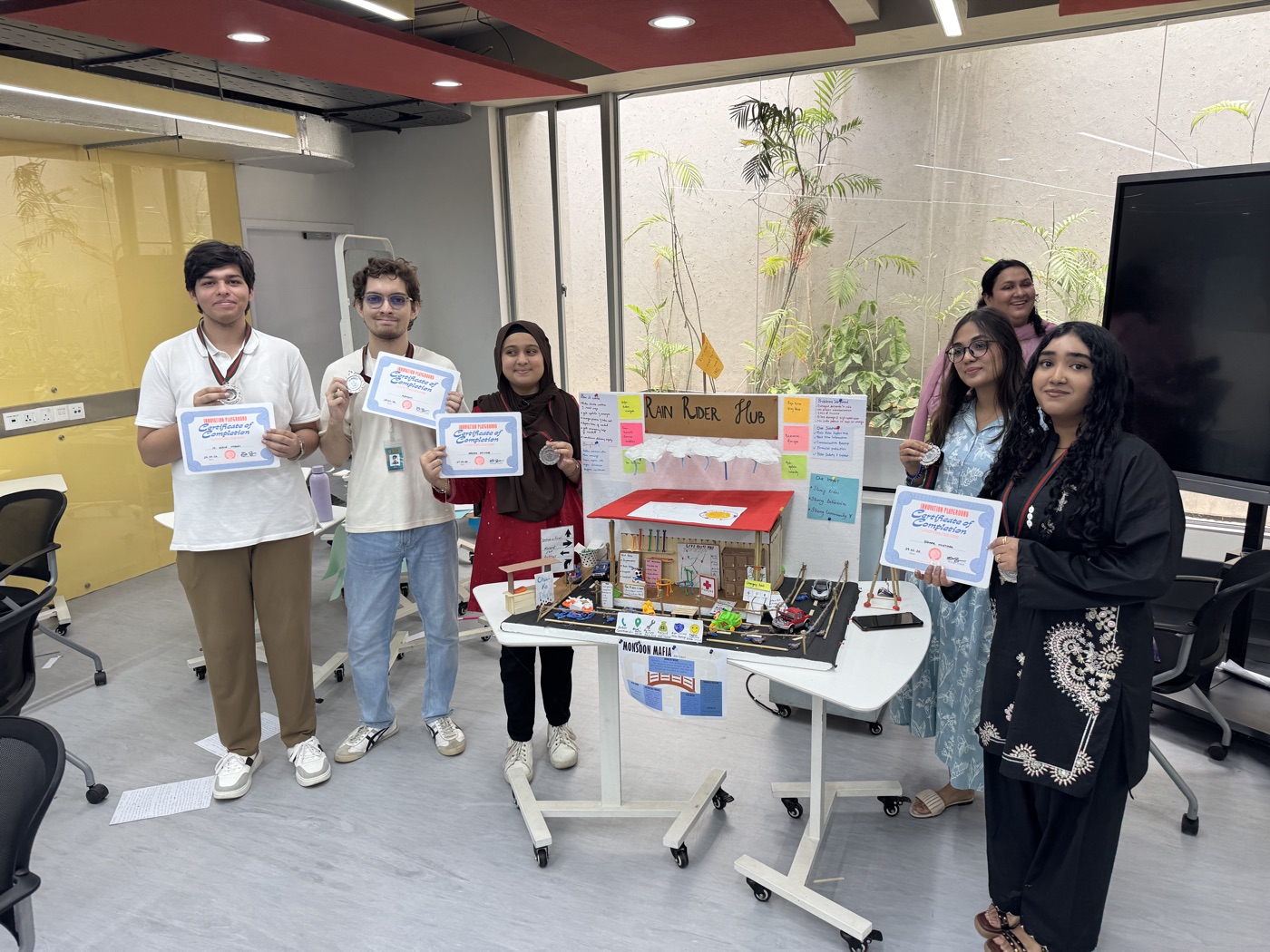
After lots of analysis, sticky-noting, and murky-middle questioning, they jumped into building. The program ended with all 24 teams presenting physical prototypes alongside their user groups, findings, insights, needs, and proposed solutions. The showcase drew Habib’s president, several vice presidents, faculty, and staff. The university retained the curriculum and facilitation materials for future cohorts and invited me to return in 2027.
Applying design across Habib
The engagement expanded beyond the studio. I led two design workshops for about 50 staff with Habib’s Office of People and Culture, and consulted with the university’s VP of Strategic Advancement and Institutional Development on its Communication & Design undergraduate curriculum.
Innovation Playground was a chance to direct design education end-to-end for a new audience, teaching them how to notice, interview, ideate, prototype, and land their work in a public showcase.