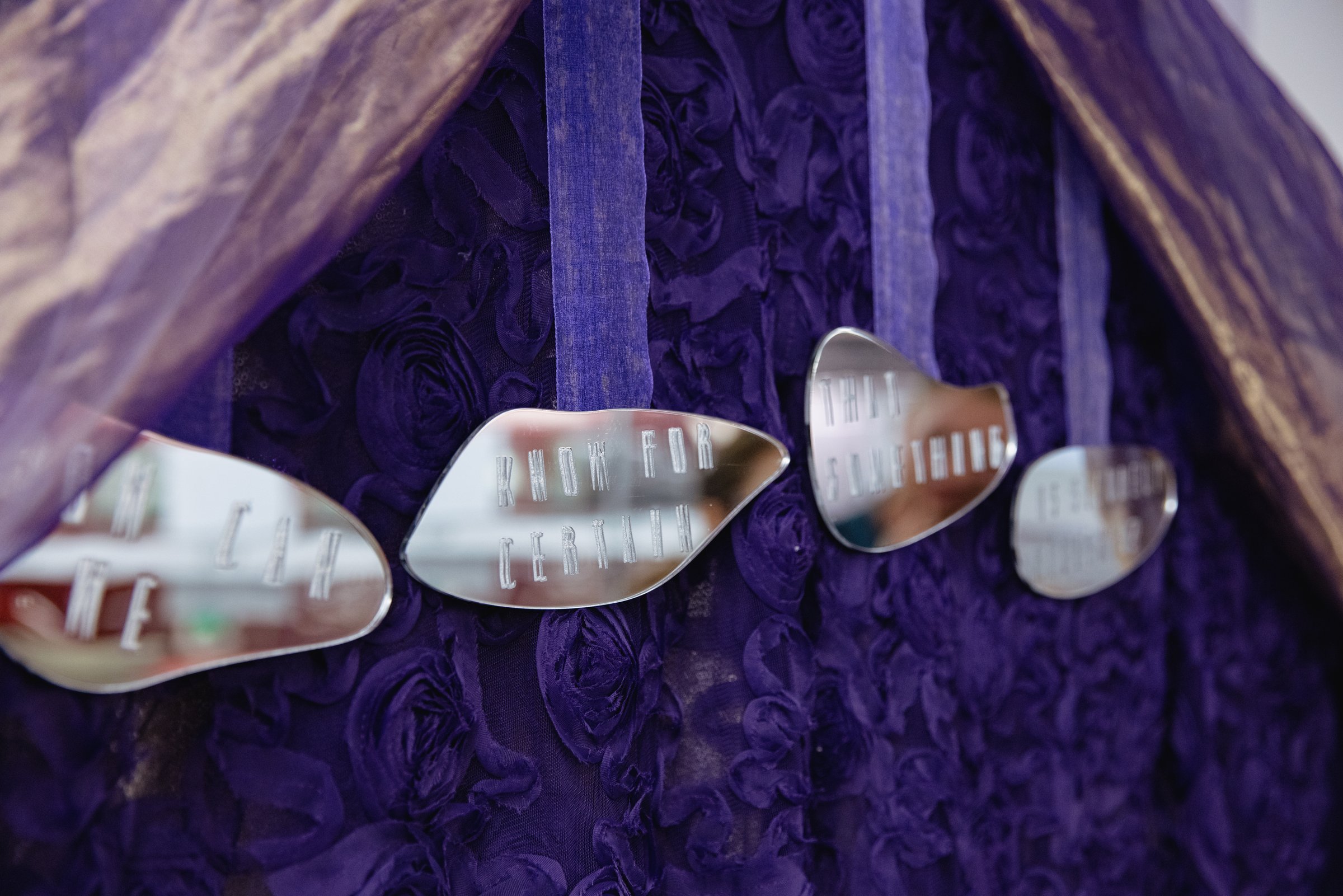
how can we know for certain that something is securely finished?
Moments of Drag
A time(piece) on Queer Temporal Drag
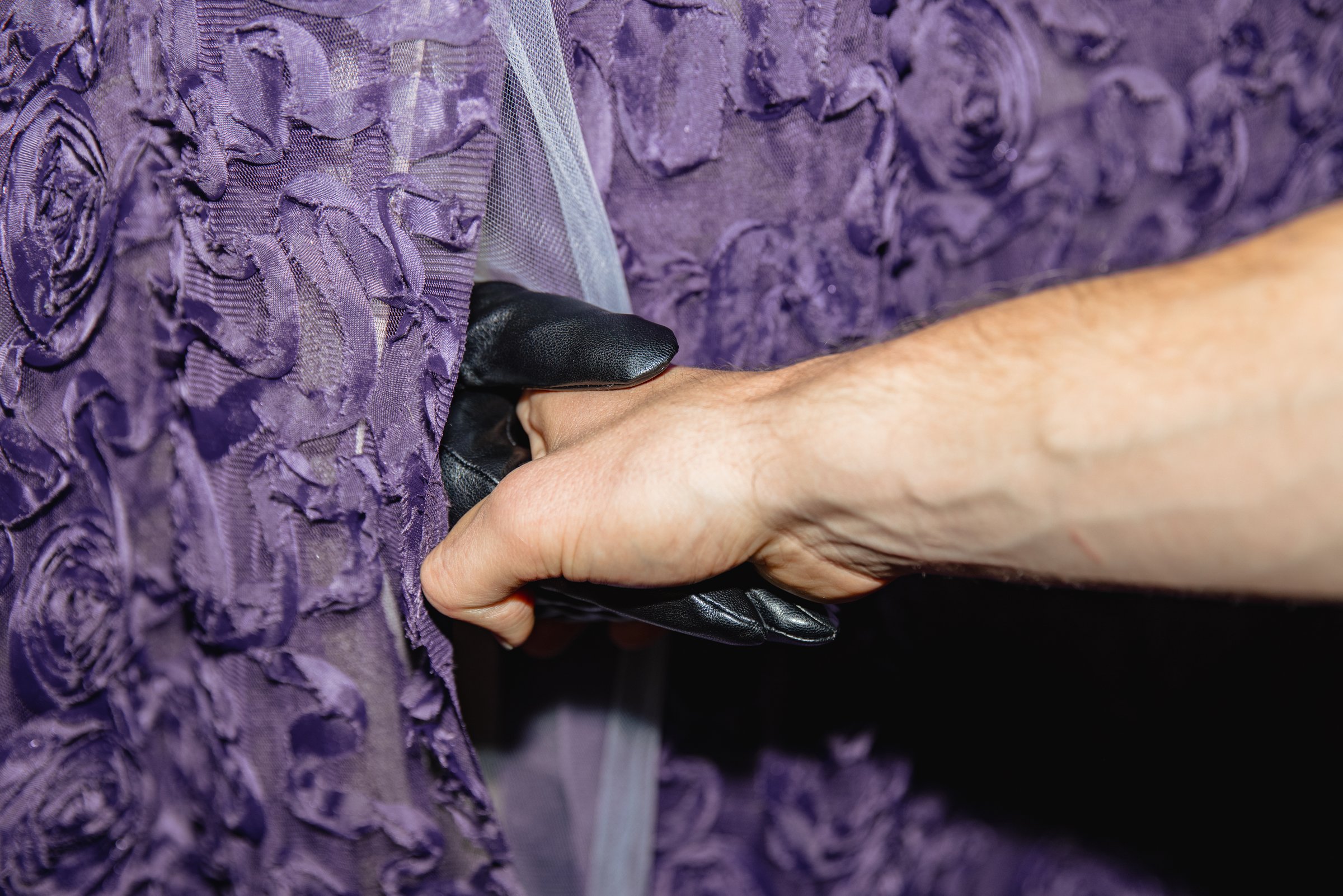
An interactive installation at the Stanford d.school: pick a card, reach through the curtain, and a real hand from the past takes yours.
Moments of Drag is a time(piece) that explores temporal drag, a concept in queer time theory which challenges traditional notions of linear temporality. The piece measures the ways in which past events and historical figures have a “dragging” effect on the present, causing queer people to feel out-of-sync with heteronormative timelines.
Making the implicit explicit
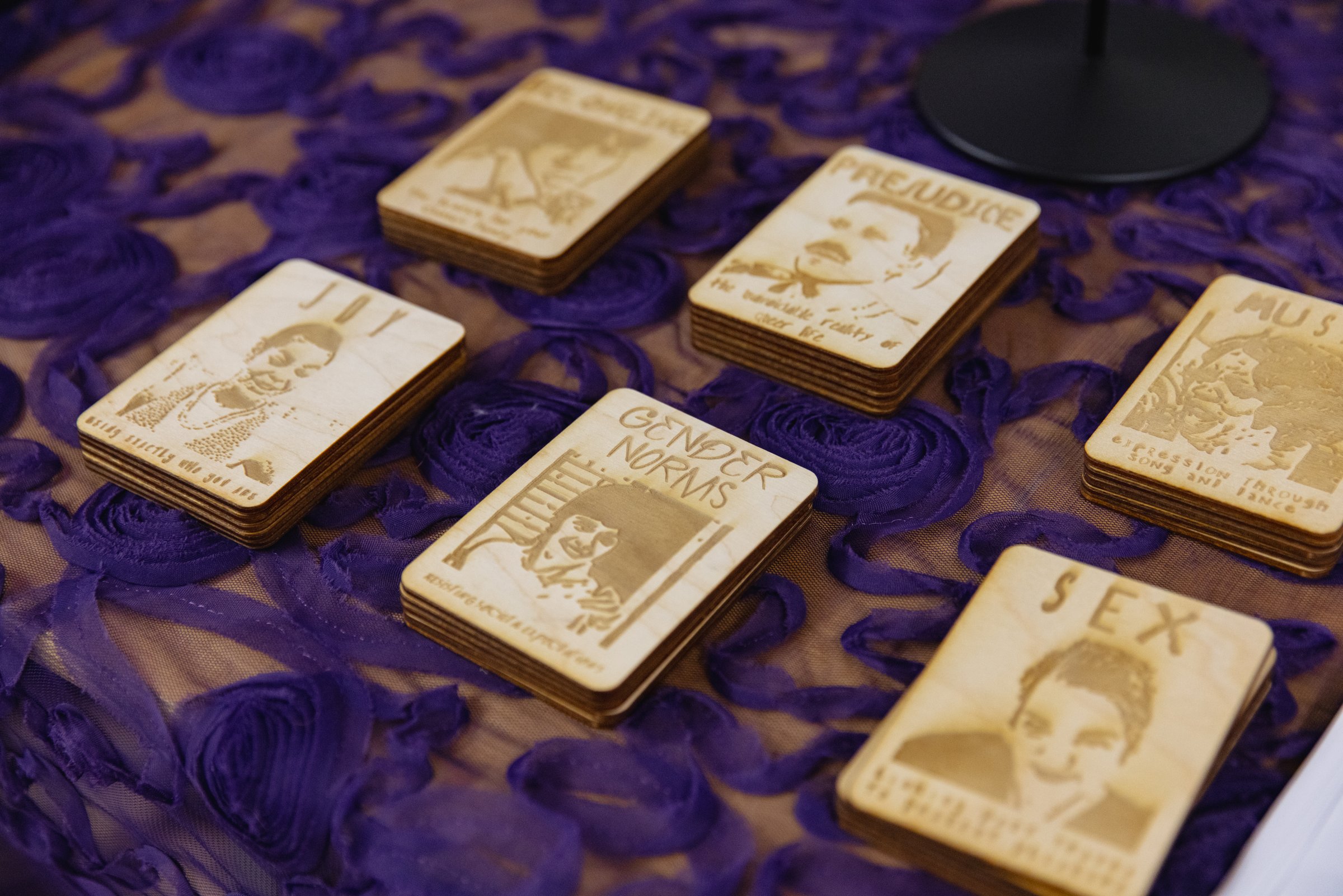
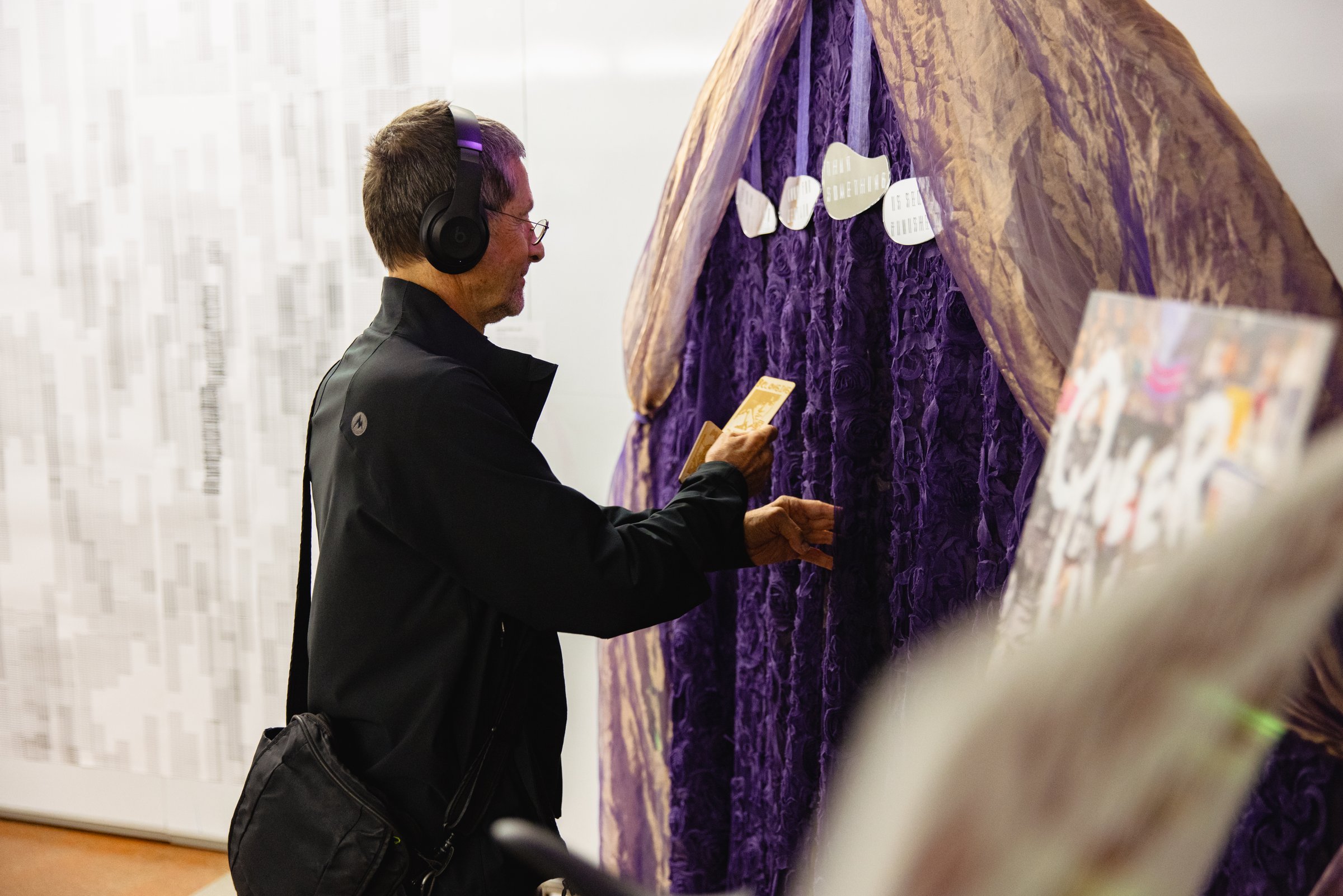
Queer people are experiencing temporal drag constantly through both physical and mental manifestations, whether they are aware of it or not. I created this time(piece) as a way to make this experience more explicit, so that queer people could explore various aspects of their identity and lived experience through their relation to queer time. I knew that the best way to do this was to create a tangible experience where users would physically join hands with someone “from the past” and hear their story. When approaching the time(piece), users reflect upon six different themes (belonging, prejudice, gender norms, sex, joy, and music) inscribed on the cards just to the side of the piece. They select the cards that move them, then pass through the curtain, at which point a (real!) person joins hands with them. They listen to an audio clip from a queer ancestor, taking in their words while connecting across the ages.
The experience, in five steps:
- 01
Choose a theme card
belonging · prejudice · gender norms · sex · joy · music
- 02
Cross the curtain
- 03
Hold a real person’s hand
- 04
Hear a voice from queer history
Time drags backward.
- 05
Back to the present, a little out of sync
Building the interaction
This was my first major making project at Stanford. I sewed the curtain and interaction space, designed and laser-cut the cards, built the audio archive, and composed the parts as a single physical experience. The most important experiential choice was the least tech-driven: a real hand on the other side of the curtain.
Sometimes it was gloved, sometimes rigid, sometimes playful. That variability made each encounter intimate and impossible to reproduce exactly. People would walk away and compare experiences, just to find that theirs was completely unique.
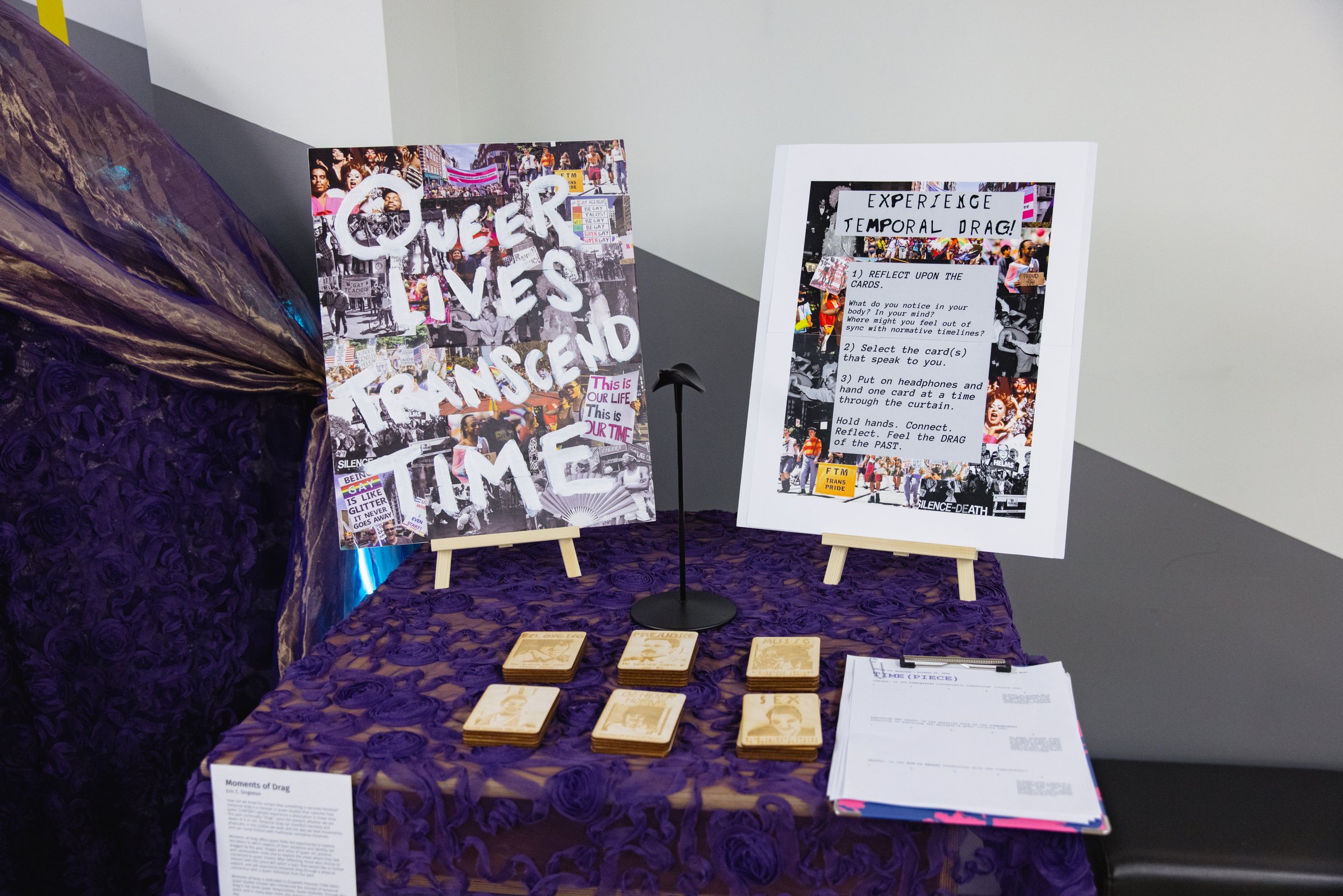
This project set the path I’ve stayed on for the rest of grad school: queer history and lost futures. It is inspired by the work of Elizabeth Freeman (1966–2024), who introduced me to temporal drag. She remains with us through this piece, and in many more ways too.